Email Marketing Isn’t Just for Ecommerce. It’s a Lead Generation Engine
When most people think of email marketing, they think of flash sales and abandoned cart reminders. But for service-based businesses—from marketing agencies and law firms to clinics, consultants, and enterprise trades—email is one of the most effective tools for generating, nurturing, and converting high-value leads.
Unlike ecommerce, where the goal is a rapid transaction, service businesses operate on trust, relationships, and longer decision-making cycles. Email is built for exactly that.
Whether you’re looking to fill your pipeline, stay front-of-mind with prospects, or turn enquiries into paying clients, email marketing gives you a direct, owned channel to make it happen.
If you’re already exploring automation, our guide on 7 Email Automations Every Ecommerce Brand Needs is a useful starting point—many of those principles apply to service models as well.
Let’s break down why email marketing works so well for service businesses.
1. It Nurtures Leads Over Longer Sales Cycles
Generating leads is easy. Generating qualified leads is not.
Service businesses rarely close a client on first contact. A prospect might discover you today, weigh their options over the coming weeks, and make a decision two months later. That window—between first touch and final decision—is where email earns its value.
A well-structured email nurture sequence keeps you present and relevant throughout that process, without requiring manual follow-up every single time.
What nurture emails do for service businesses:
- Keep you visible while prospects are actively evaluating alternatives.
- Share useful content that builds credibility and answers objections before sales calls.
- Guide prospects naturally toward booking a consultation or discovery session.
- Reduce friction and prevent warm leads from going cold between touchpoints.
Platforms like HubSpot, ActiveCampaign, and Klaviyo are engineered specifically to power this behavior-based, multi-step lead nurturing.
2. You Own Your Pipeline (Not Just Your Traffic)
Social media reach is borrowed. Paid media reach is rented. Your email list is owned.
Algorithm changes, fluctuating ad costs, and platform policy shifts can alter your reach overnight. Your email list doesn’t vanish when Meta adjusts its auction algorithm or Google rolls out a core search update.
For service businesses, this matters more than most:
- Your audience is smaller and more targeted than an ecommerce brand’s—every contact represents a real commercial relationship.
- Long-term relationships form the foundation of repeat contracts, retainers, and referrals.
- First-party data provides algorithm-proof stability in an era of tightening privacy laws.
Building and maintaining a clean email list is one of the safest long-term marketing investments a service business can make.
3. It Builds Trust and Positions You as an Authority
Clients don’t hire service providers they’ve barely heard of. They hire experts they trust, respect, and believe can solve their immediate headaches. That trust cannot be established in a single ad impression—it is earned over time.
Email gives you a direct, uncluttered channel to demonstrate authority and deepen credibility with every send:
- Educational deep-dives addressing real challenges your prospects face.
- Case studies and teardowns showcasing tangible ROI and process clarity.
- Industry insights positioning your leadership as forward-thinking specialists.
- Behind-the-scenes perspectives highlighting how your team operates.
When a prospect has read your emails for two or three months before booking a call, they are no longer a cold lead. They already understand your approach, your values, and why your team is the obvious partner.
4. It Turns Past Clients Into Repeat Business and Referrals
Acquiring a brand-new client costs significantly more than retaining an existing one. For service providers, past clients are frequently the single most underleveraged source of immediate growth.
Email provides a low-lift, high-impact channel to stay connected after an engagement wraps up, ensuring you remain top-of-mind when new needs arise:
- Periodic check-ins that offer genuine value rather than aggressive sales pitches.
- Announcements about new service capabilities, frameworks, or expanded solutions.
- Strategic prompts to request reviews, testimonials, or peer referrals.
- Re-engagement flows for clients who haven’t interacted in 6 to 12 months.
A single reactivated client or one enterprise referral can generate thousands in revenue. Automated email keeps those relationships warm without burdening your internal team.
5. It Supports the Entire Client Journey, From Enquiry to Onboarding
Email marketing is not merely a top-of-funnel lead generator. For service businesses, it actively supports every milestone of the client lifecycle, particularly after an agreement is signed.
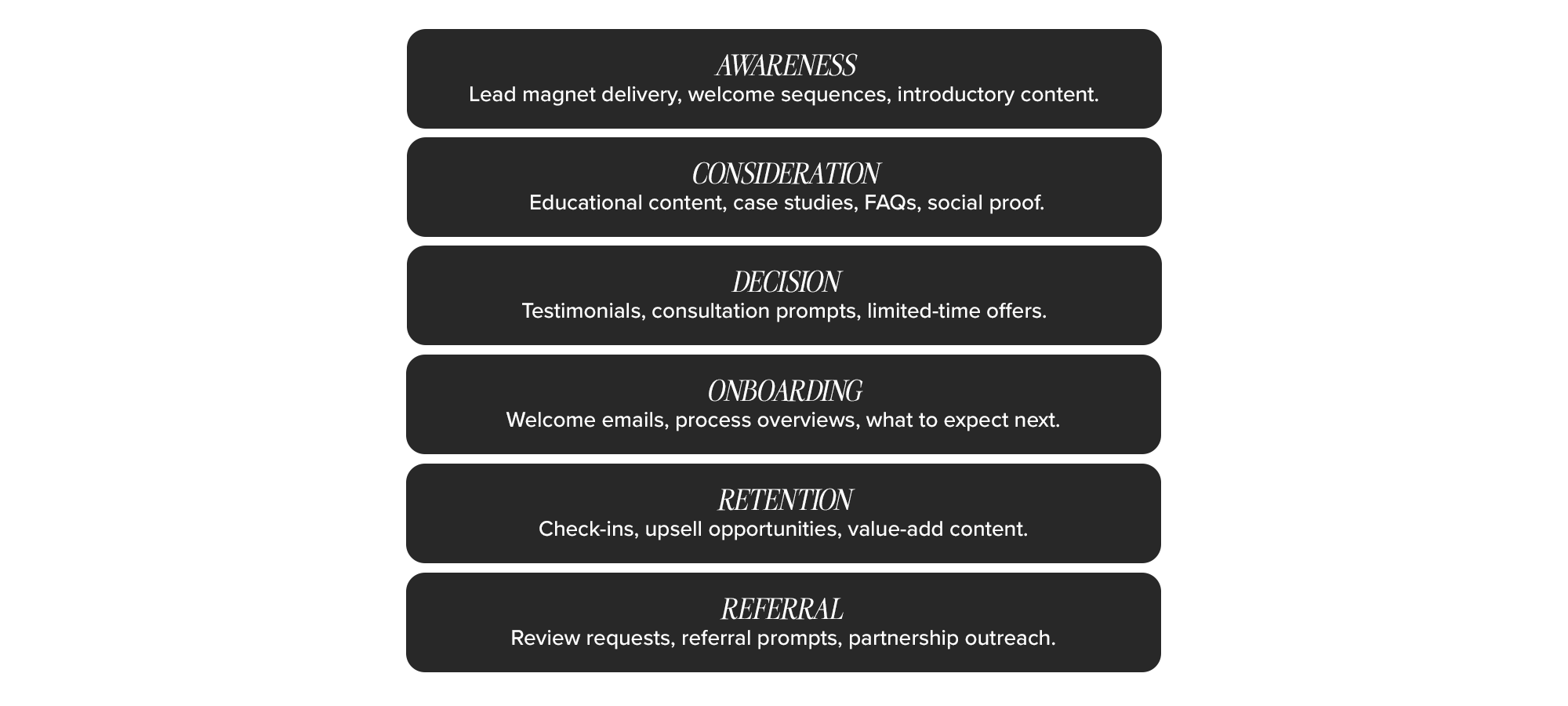
The onboarding stage is particularly crucial and often neglected. A structured onboarding email sequence establishes clear timelines, reduces early friction, and reassures new clients that they made the right investment—directly elevating client retention and lifetime value.
6. Personalisation Delivers the Right Message at the Right Stage
Not all prospects require the same message. Some have just stumbled upon your site; others have evaluated your pricing for weeks. Some need one specific service, while others need full-service agency support. Broadcast blasts satisfy none of them.
Modern CRM and email automation engines allow service businesses to segment contacts dynamically:
- Lifecycle stage: New leads, warm prospects, active clients, and past clients.
- Service interest: Paid search, SEO, CRM, or creative design.
- Industry vertical: B2B SaaS, healthcare, real estate, professional services.
- Acquisition source: Paid social, Google search, webinar, or personal referral.
- Engagement level: Highly engaged readers vs. fading contacts.
Tailoring your communication yields higher open rates, deeper engagement, shorter sales cycles, and vastly better client alignment.
7. It’s Scalable, Automated, and Frees Up Your Time
For service firm founders and account directors, time is the scarcest commodity. Trying to manually draft emails between client deliverables is unsustainable.
Once your core email infrastructure is built, the vast majority runs on autopilot:
- Lead magnets and welcome sequences fire instantly upon sign-up.
- High-intent inbound enquiries receive an immediate response within minutes.
- Dormant leads trigger automatic re-engagement flows after defined inactivity windows.
- New clients enter a seamless onboarding flow the moment their deal closes.
Compared to paid media, where you pay for every single click and impression, email delivers remarkable compounding ROI with minimal ongoing marginal cost.
Common Mistake: Treating Email Like a Newsletter Broadcast
The most frequent error service firms make is treating email purely as an occasional monthly newsletter. While newsletters can keep casual contacts informed, relying on them alone leaves the majority of email’s commercial power on the table.
Unstructured broadcasts lead to:
- Leads going cold during multi-week communication silences.
- Missed opportunities to advance warm prospects toward booking calls.
- Inconsistent open rates and declining inbox deliverability.
A high-performing email system integrates targeted lead nurture flows, automated onboarding sequences, and win-back touchpoints into a unified engine.
How Email Fits Into Your Lead Generation Funnel
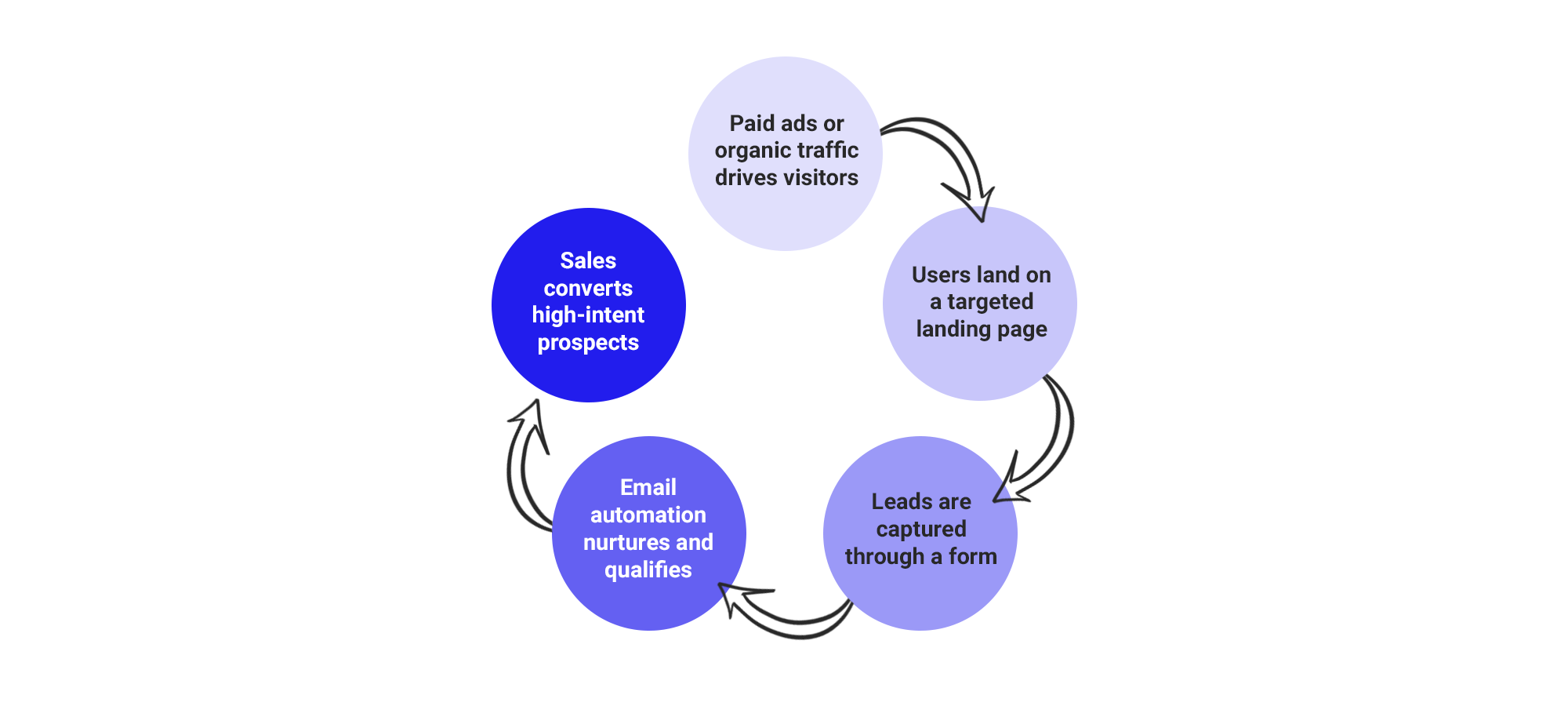
Email serves as the vital bridge connecting initial marketing discovery with closed sales contracts.